Sat, 10 Oct 2026

On Photography and AI

— SjG @ 12:42 pm

There was a recent brouhaha about a video competition withdrawing its award because of AI use. I talk about image manipulation apropos photography and “cheating” here occasionally (most recently on choosing angles and removing power lines).

To some extent, this is simply a problem where we’ve been trained to believe that photographs depict some objective reality. It’s never been true, but it’s strangely less true than ever before. Generative diffusion techniques unlock a whole new horizon of fakery, and it’s hard not to conclude that the people pushing it everywhere are interested in destroying baseline confidence in the ability to understand reality (or to destroy a concept of reality itself).

For what it’s worth, I do use tools to post-process images, and this is usually in order to change or enhance the narrative of the picture.

For example, here’s a picture of a hummingbird sitting on branch in front of the full moon I took in April.
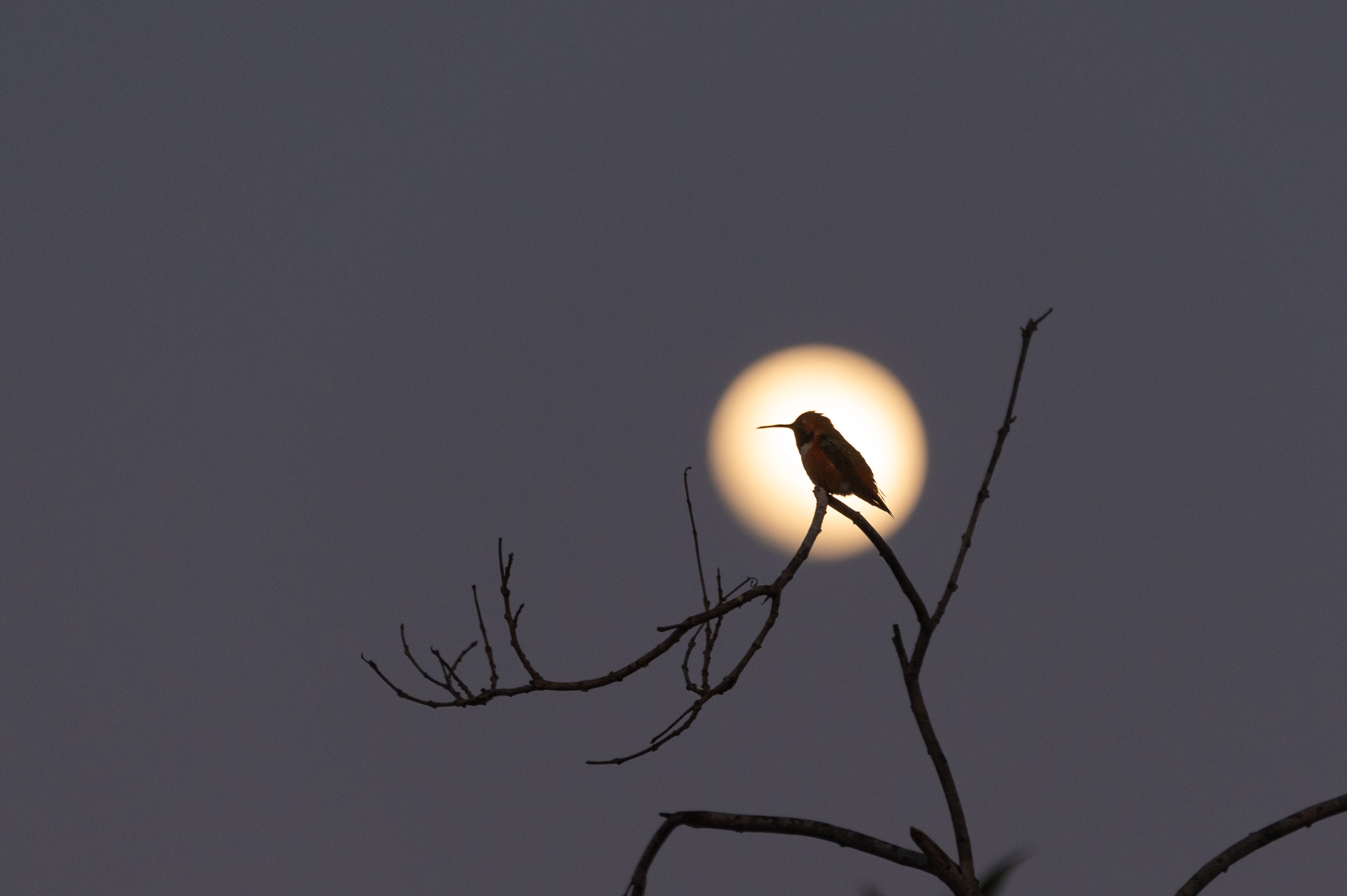
Hummingbird and full moon

This image is different than the original capture. First off, the sensor in most digital cameras does not have true color perception, but only measures luminance. A pattern of colored filters are put over the sensor, and the camera uses interpolation to determine the color image.

Beyond that, I cropped the image, and adjusted the relative lighting. That hummingbird was not illuminated, so in contrast to the moon behind it, there was almost visible detail. In software, I brightened up the levels of the shadowed area, and I increased the saturation so you could see the faintest hint of color.

Wanna see the straight-out-of-the-camera version? Of course you do.
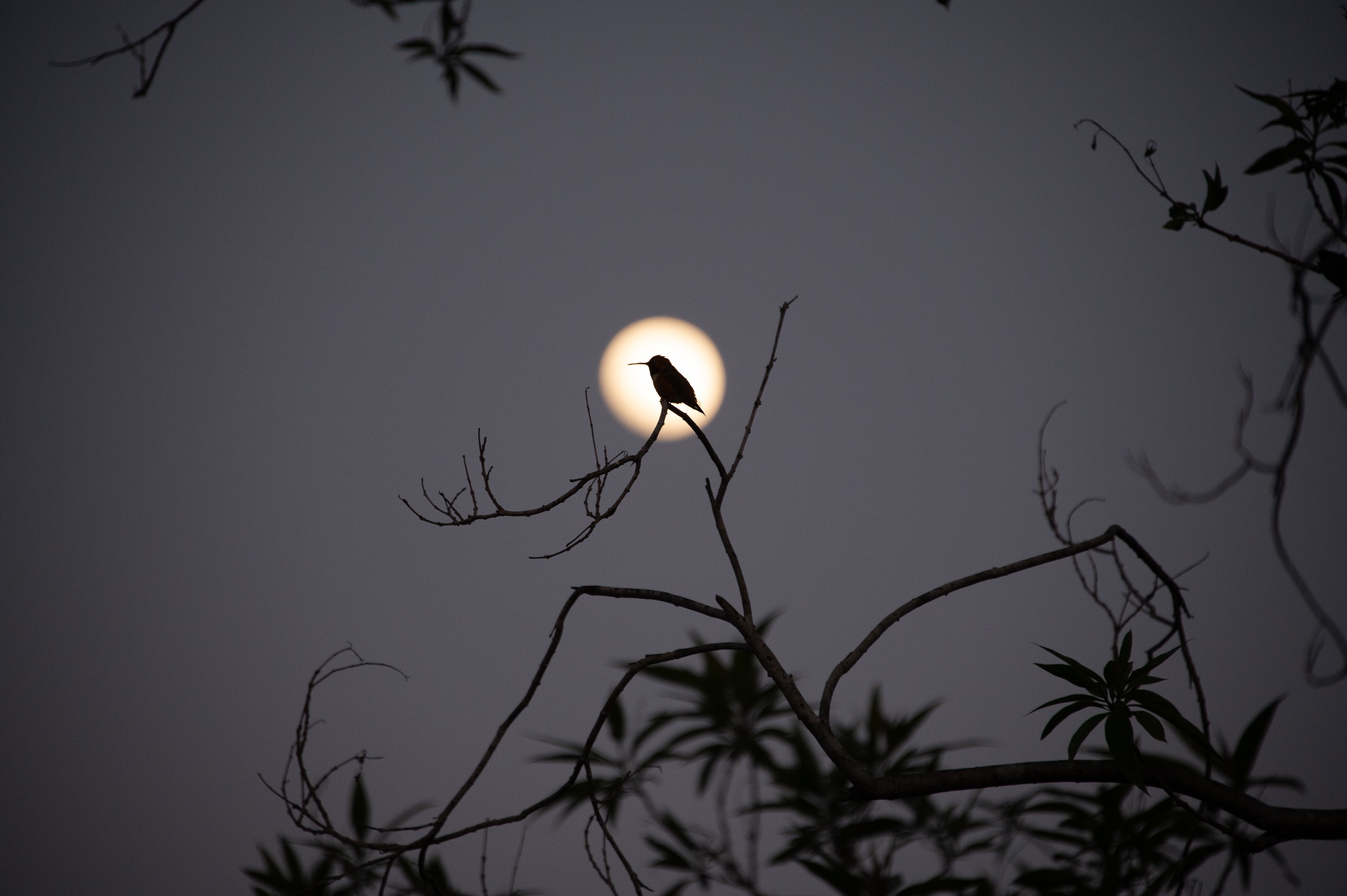
Un-edited photo

This original picture tells a different story. It tells me that I didn’t have the 600mm lens on the camera. It’s not a bad picture, but I like my edited version better: it’s more about the hummingbird.

A few other things are worth discussing. My camera isn’t taking “High Dynamic Range” (HDR) photographs. With HDR, it would have taken multiple exposures at different light levels and then combined them algorithmically. It could have got more color in the hummingbird. The camera is also not doing focus stacking. With focus stacking, it would have taken multiple exposure at different focal distances, then combined the sharp areas of each photo to form the final image. In this case, there are really only two focal areas, the bird and the moon. The physics of my lens allowed me to get one or the other in focus. With focus stacking, I could have combined multiple images and gotten both.

You could look at both of these multiple exposure techniques as cheating, or you could consider them ways of circumventing physics to make an image more like one we “see.” Our eyes play all sorts of tricks to circumvent physics, like constantly moving and changing focus, but the processing that takes place in our brains makes it seem like we’re seeing this heavily processed information gathered over time as a single instantaneous image.

The following version is from ChatGPT. It was asked to take the top image, and fed the prompt “Can you please enhance this image, bring out the colors in the hummingbird, and bring the full moon behind it into clearer focus? I’d like it to remain photorealistic and dramatic.” Below are the results. I’ll let you assess for yourself.
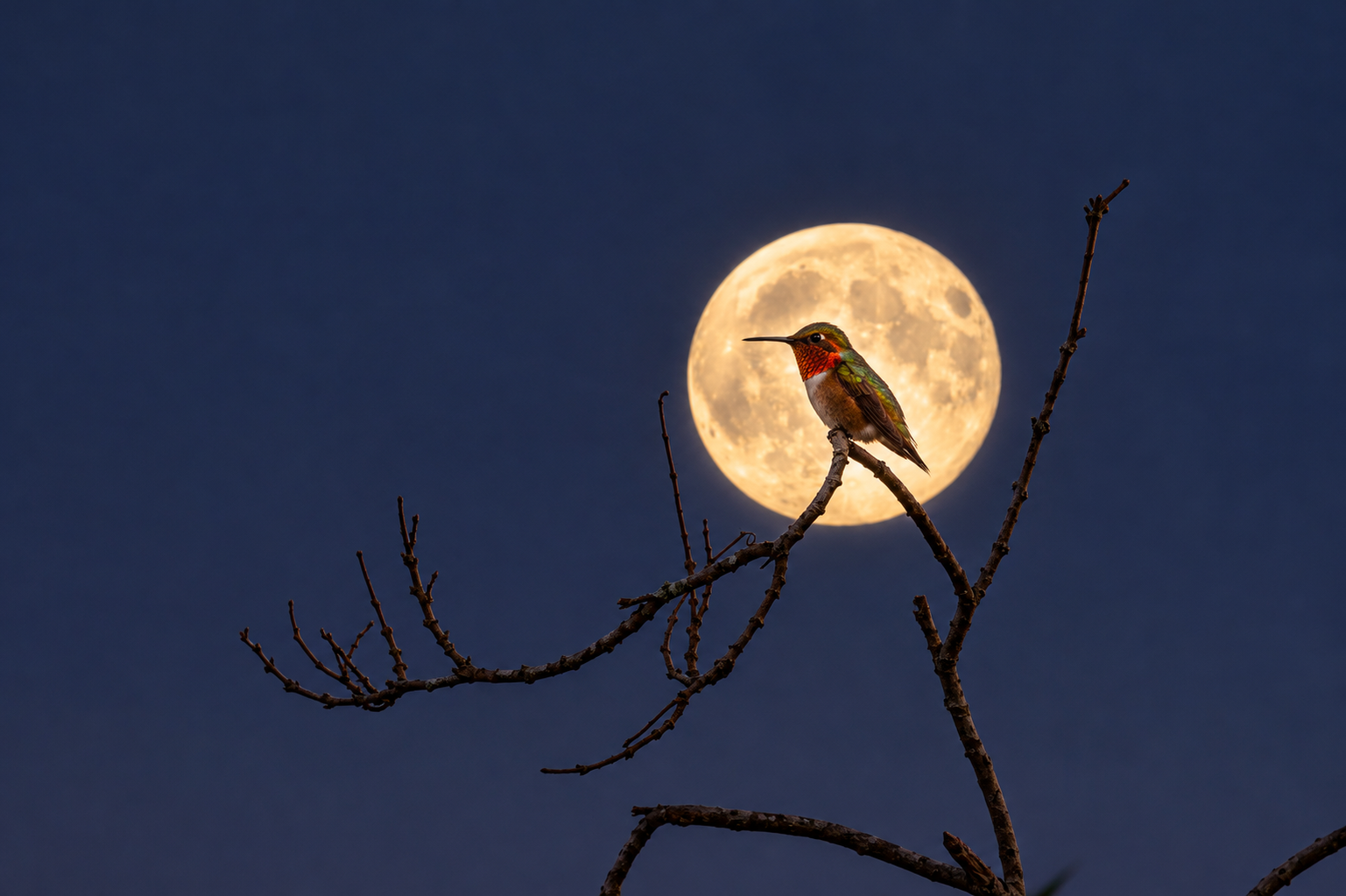
ChatGPT Processed Image

What’s did the AI processing do? Well, it cropped closer in, for one thing. It brought up the colors in the hummingbird. And it replaced the moon with a different picture of the moon.

My processing could never have made the image look like this. The information simply wasn’t in the data I got from the camera — the moon, for example, was too far out of focus and had none of the detail in it. It looked like the hummingbird was replaced too. Could I have got those colors if I’d tweaked the exposure enough? Well, to find out, I took the original unaltered image, and cranked up the exposure to see. And yes, you can see that it replaced the hummingbird altogether. Compare the chin coloration and the angle of the head — that ain’t the same bird!
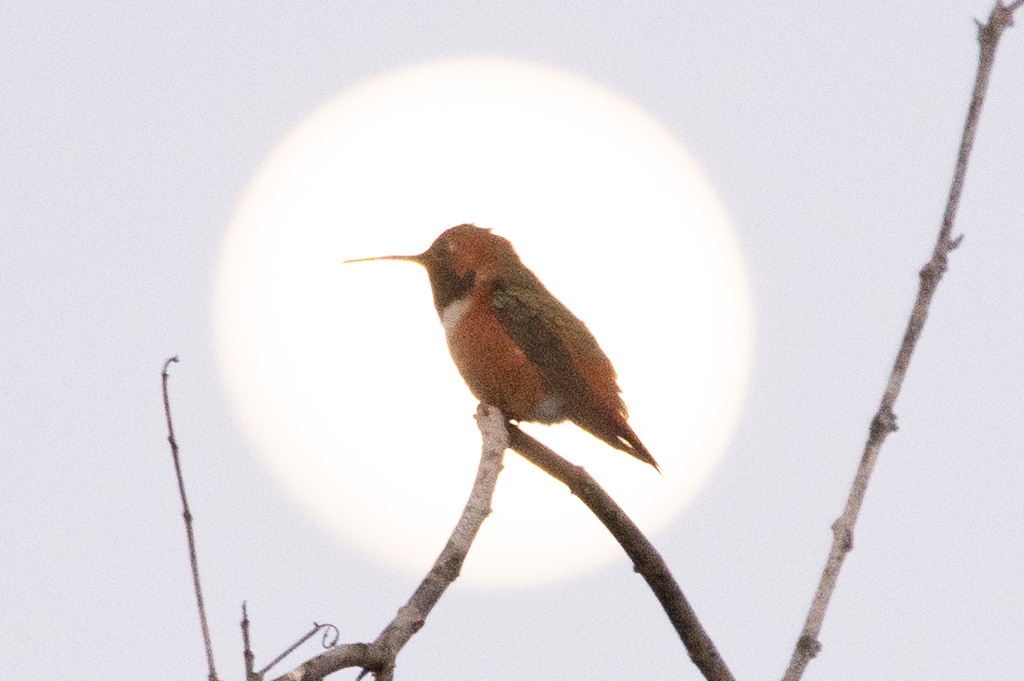
Original image details

So what’s the point of this entire discussion? I guess I’m trying to draw lines between “legitimate” image manipulation to tell a story, and “faking it.” The line’s not a very clear one, but I do think there’s a distinction to be made.

Obviously, with better prompting, I may have gotten less obvious changes. If they had been subtle, would I have felt better about it? Not really. To me, the addition of statistically-generated data means it’s no longer “real.”

What are your thoughts?
Wed, 6 May 2026

Boring birds

— SjG @ 8:54 am

Many years ago, as a young stripling, I was on a Sierra Club hike when an older gentleman told me he figured I’d probably become a birder. Now, I’ve always had a fascination with and affinity for some kinds of birds — ravens and crows, hawks and owls — but never thought of myself as particularly interested in birds. So I’d expressed doubt to the gentleman, who explained to me that “all the better people who have an interest in nature become birders eventually, if they live long enough.” While flattered to be considered “better people,” I was still skeptical.

Well, I’m a lot older now than I was. Several college friends have extensive camera rigs for birding and take astonishing pictures, and I find that I too am interested in bird photography. On the Fediverse, I follow many avid birders, and I am catching the contagious enthusiasm of seeing a new species or the first view of the year of a migrating species. I still don’t consider myself a birder, but after watching this video with Christian Cooper, I may reconsider.

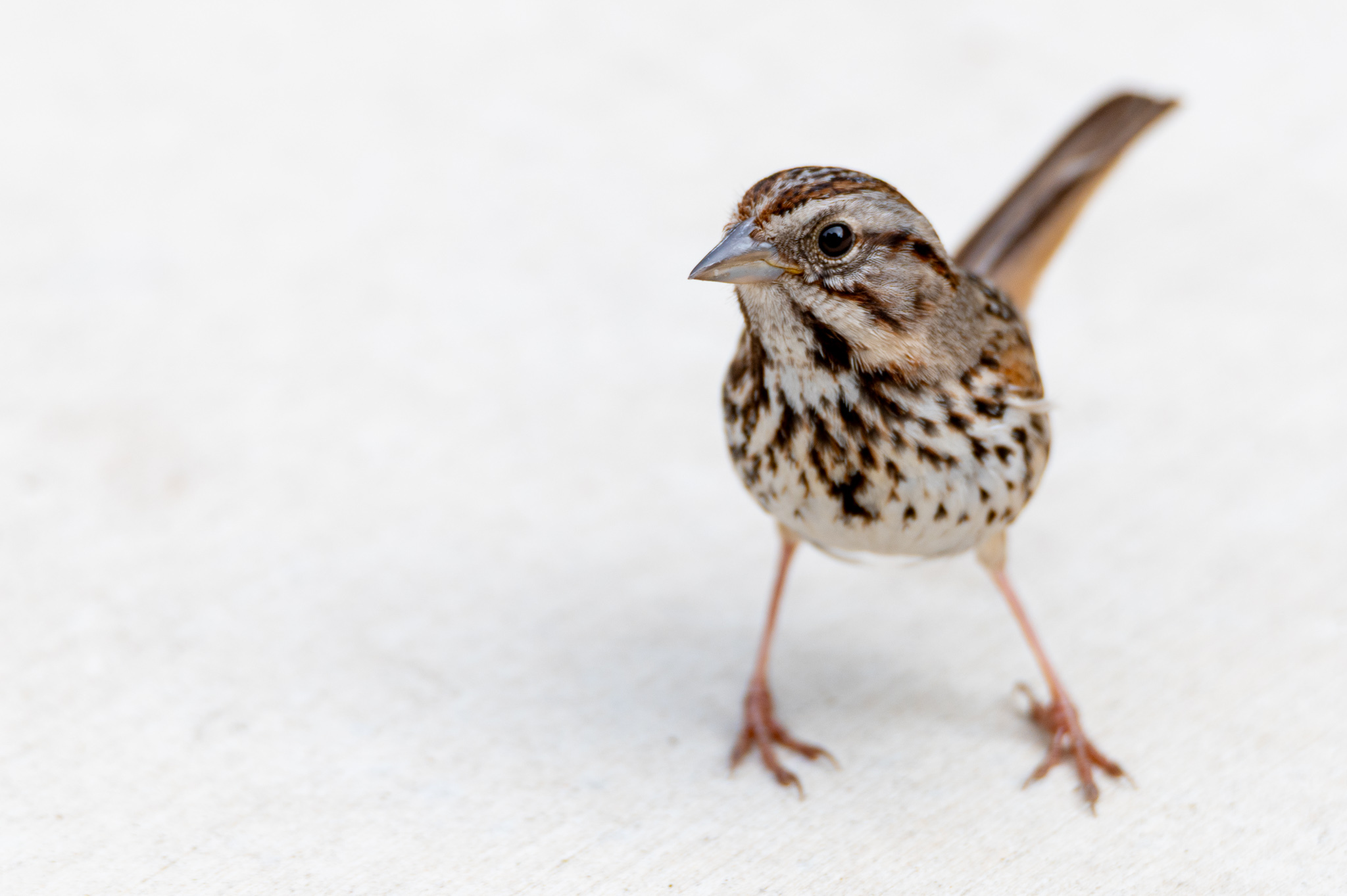
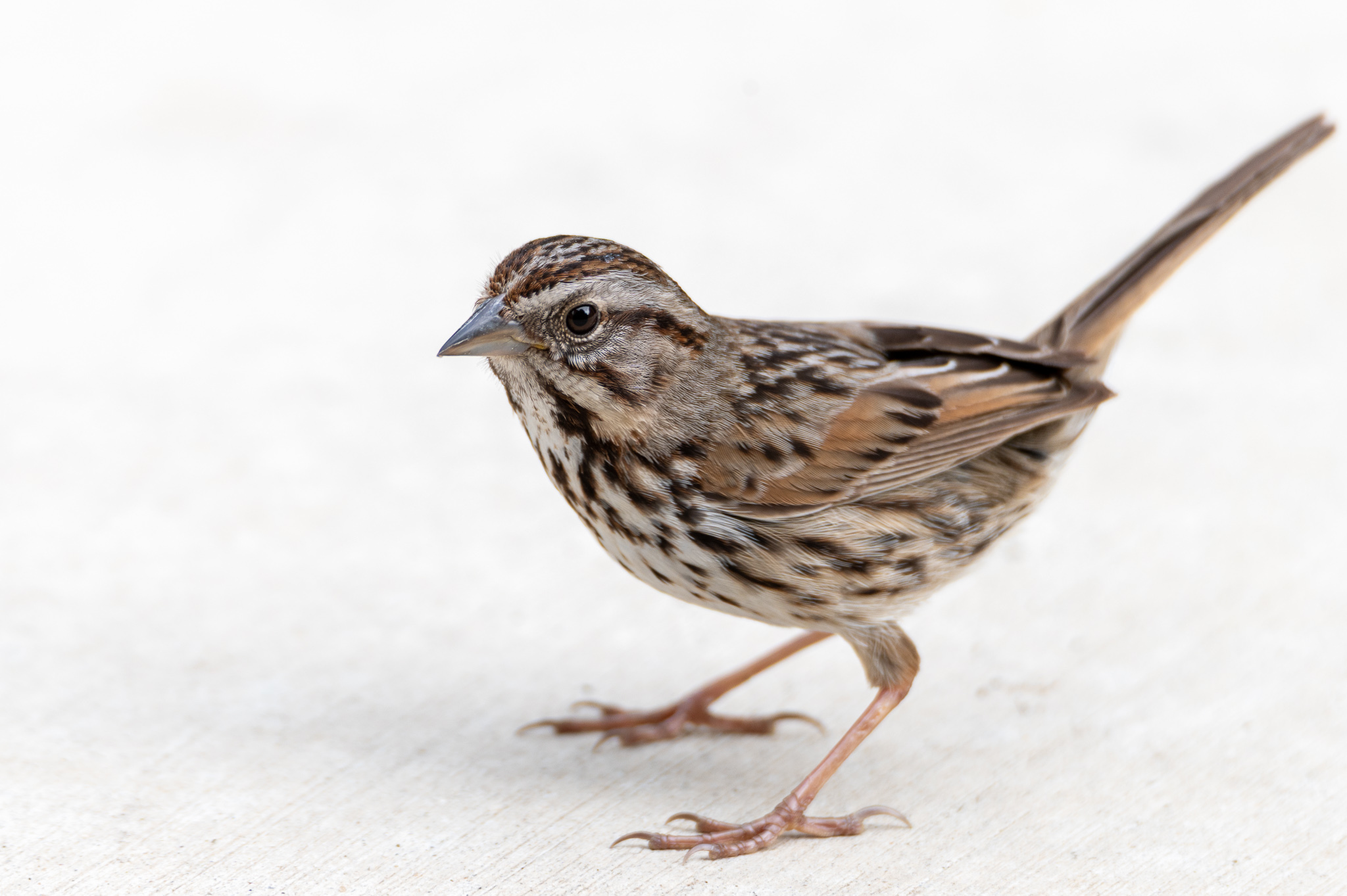
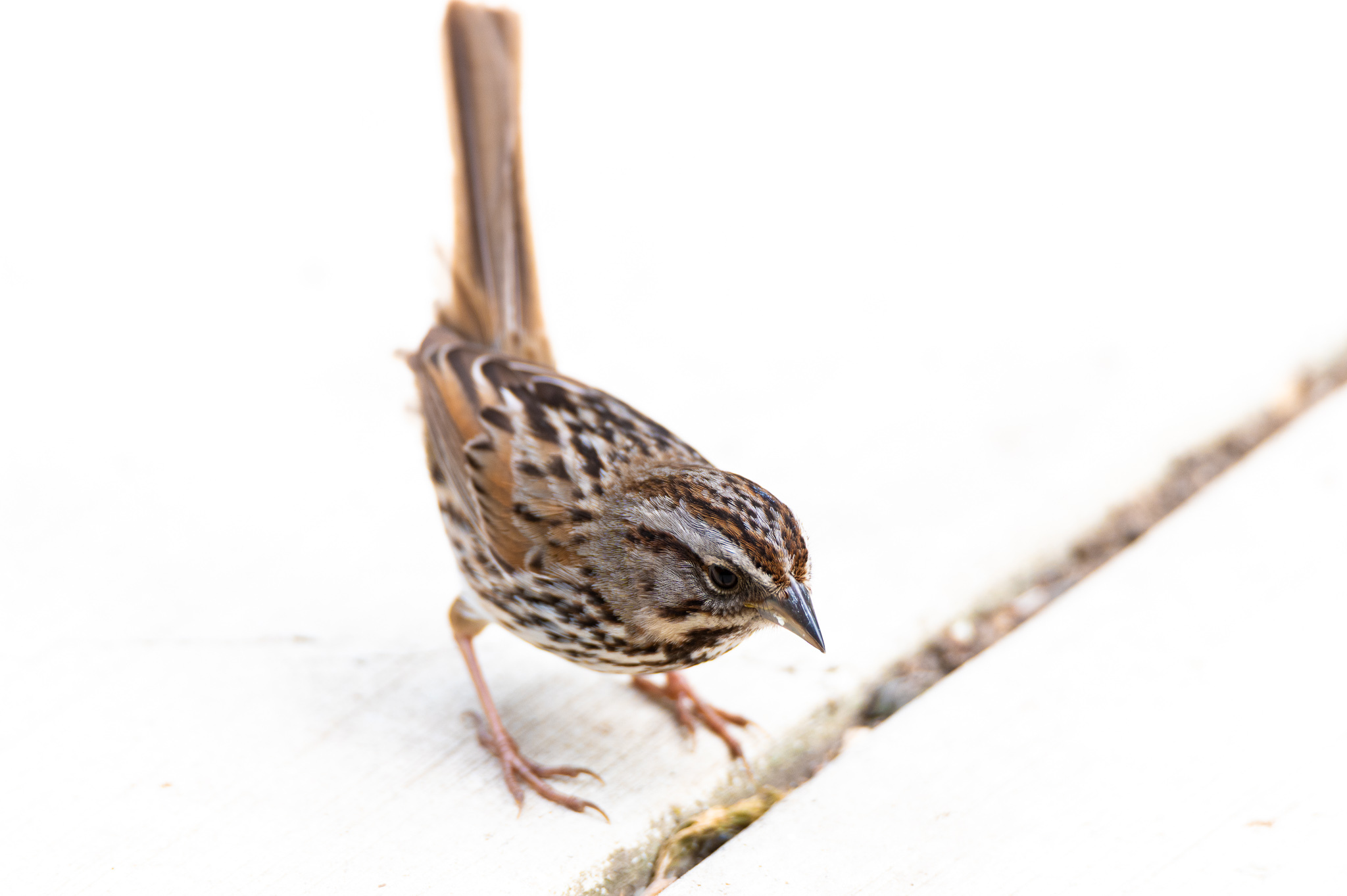
I’ve shared hummingbird pictures here before. They’re fascinating and colorful and have a lot of character. But one thing I’ve “discovered” of late is just how interesting the typical boring garden-variety “little brown birds” can be! We have a bird feeder, and will sometimes toss little bits of peanut to a song sparrow while sitting out on the front porch. We dubbed the swallow “Squeaker,” and it’s a comical little bird, who will beg and scold us when we go out front.

Squeaker

Then, to our surprise, one day we realized that Squeaker was not a single bird, but at least a pair, and possibly their kid too. It was just that before the realization, we’d only seen one of them visit at a time. The begging and scolding behavior seems to run in the family. We’ve seen one of them gather up bits of peanut to feed to another — whether it’s their mate, friend, or offspring, we don’t know.

Squeaker … or Squeakette?

Song-sparrows are super common in Los Angeles. They’re everywhere. But take a look at them! Look at those feather patterns, and the little eyelash feathers. They are amazing critters.

Which one are you?

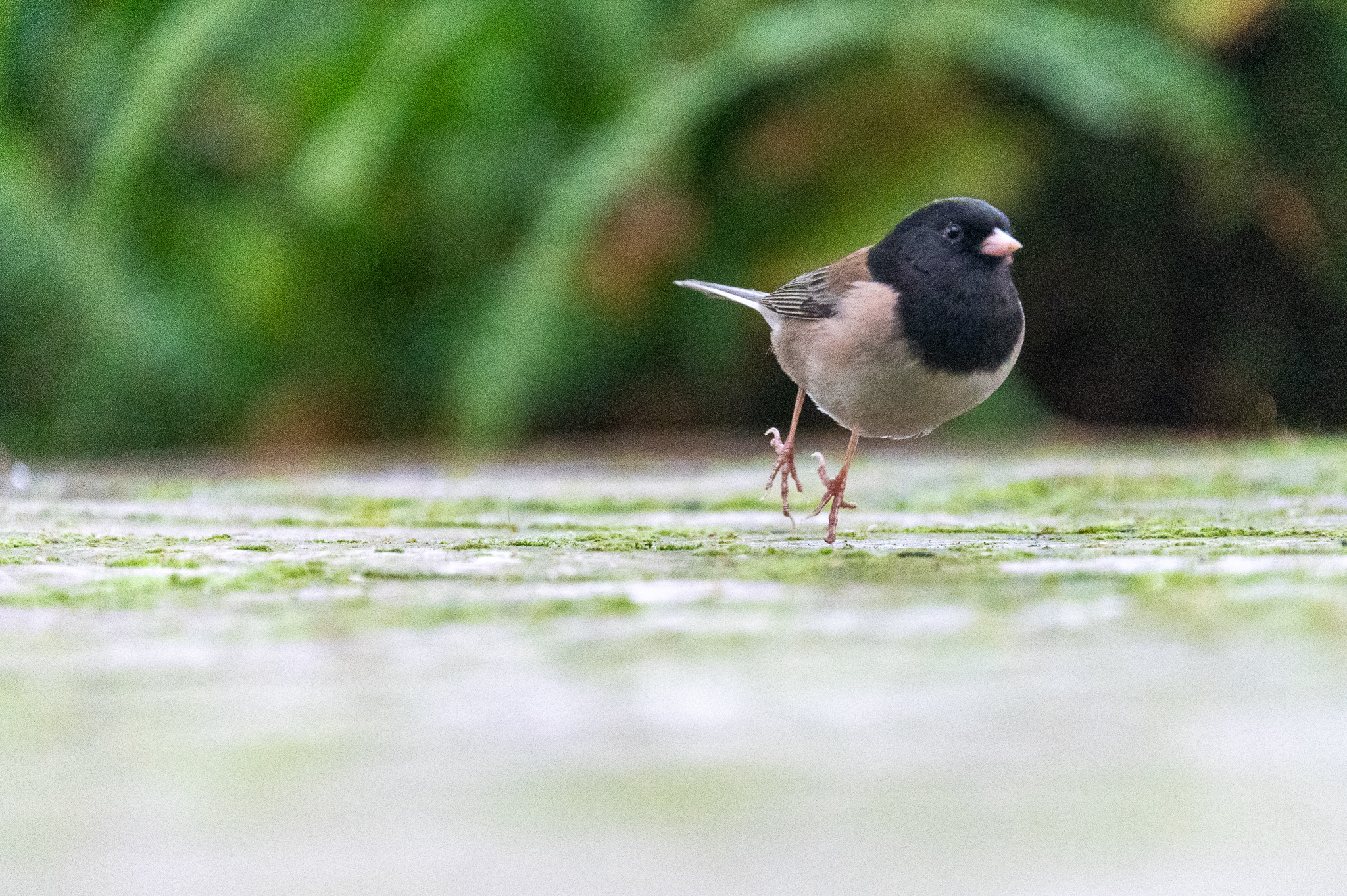
These little loud birds have a lot of personality, but they’re not the only ones. Up at my mom’s house, there’s a dark-eyed junko that’s nesting in one the flower pots. If Squeaker et al are comical in their demanding behavior, these junkos are hilarious little hoppers that bounce their way around the patio like little cartoon characters.

Boooooiiiiing!

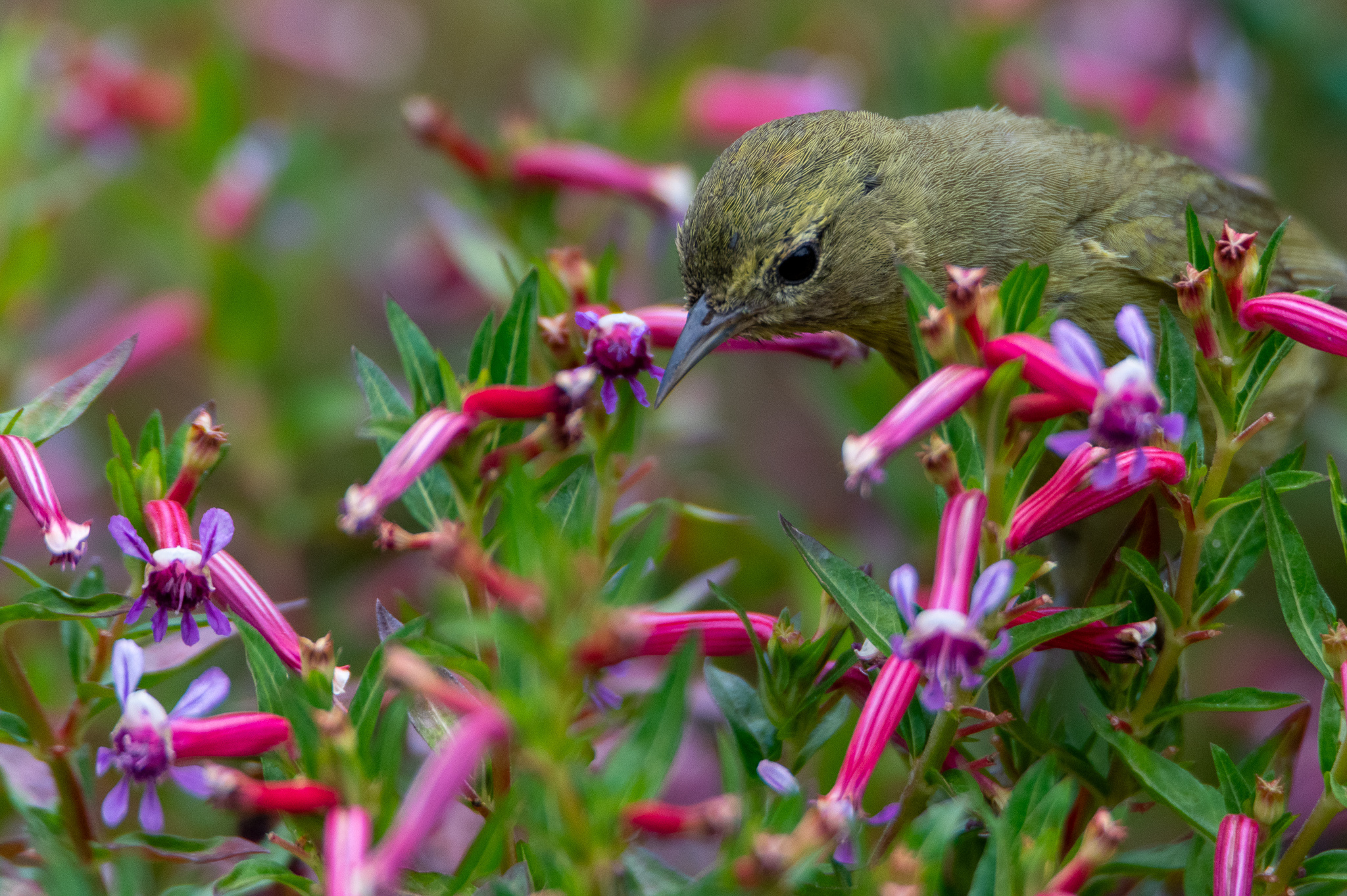
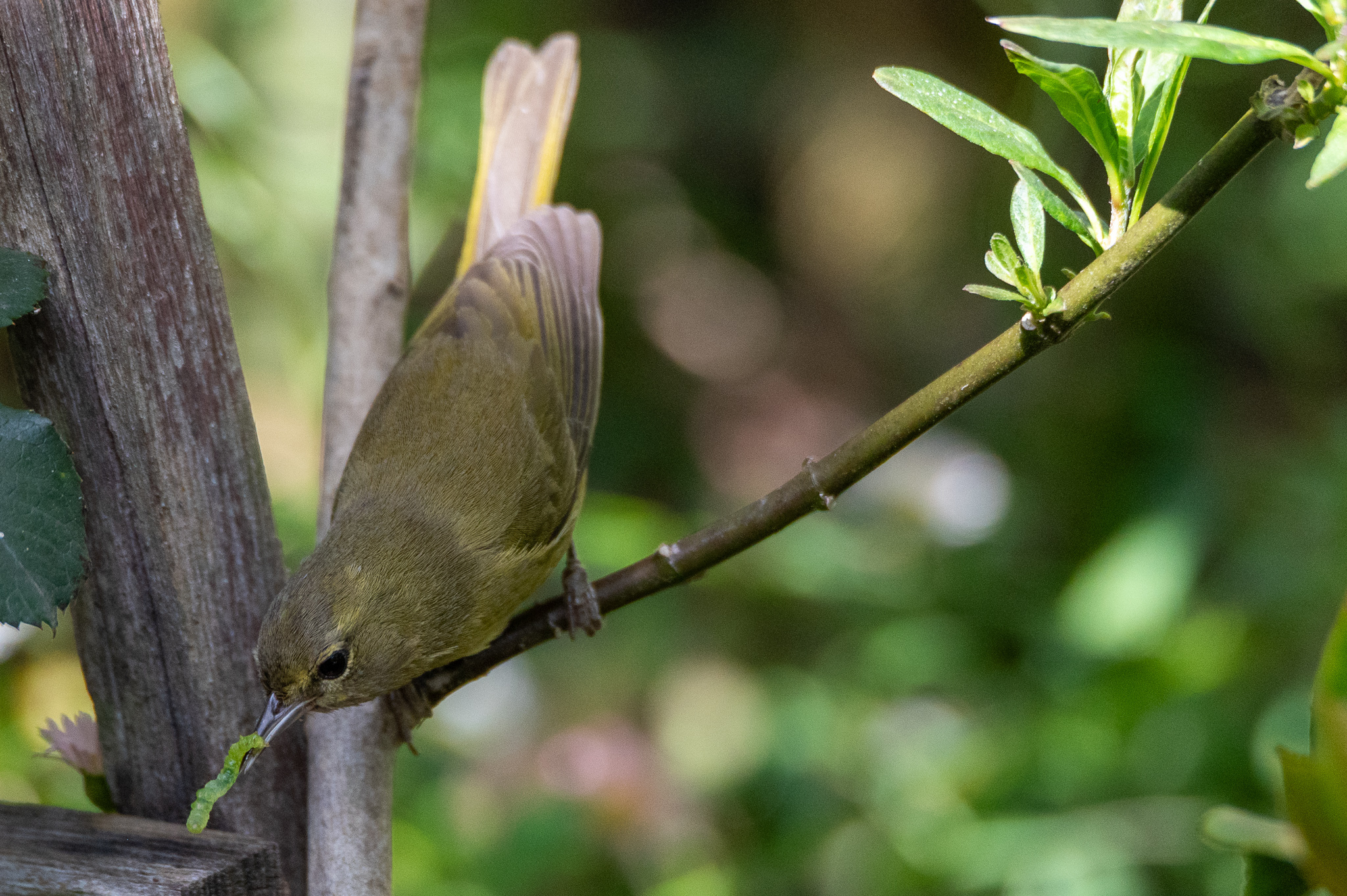
This year, I’ve really started noticing the warblers. We’ve had a family of orange-crowned warblers hanging out in the garden. They’re voracious hunters, and I can often hear their trill as they pop around in the bushes hunting caterpillars and spiders.

Hunting

Check out that intense look. If I were smaller, I certainly wouldn’t want to have that look directed at me.

Over in the nasturtiums, there was a looper. I didn’t see it, but this little warbler sure did.

Caught one.

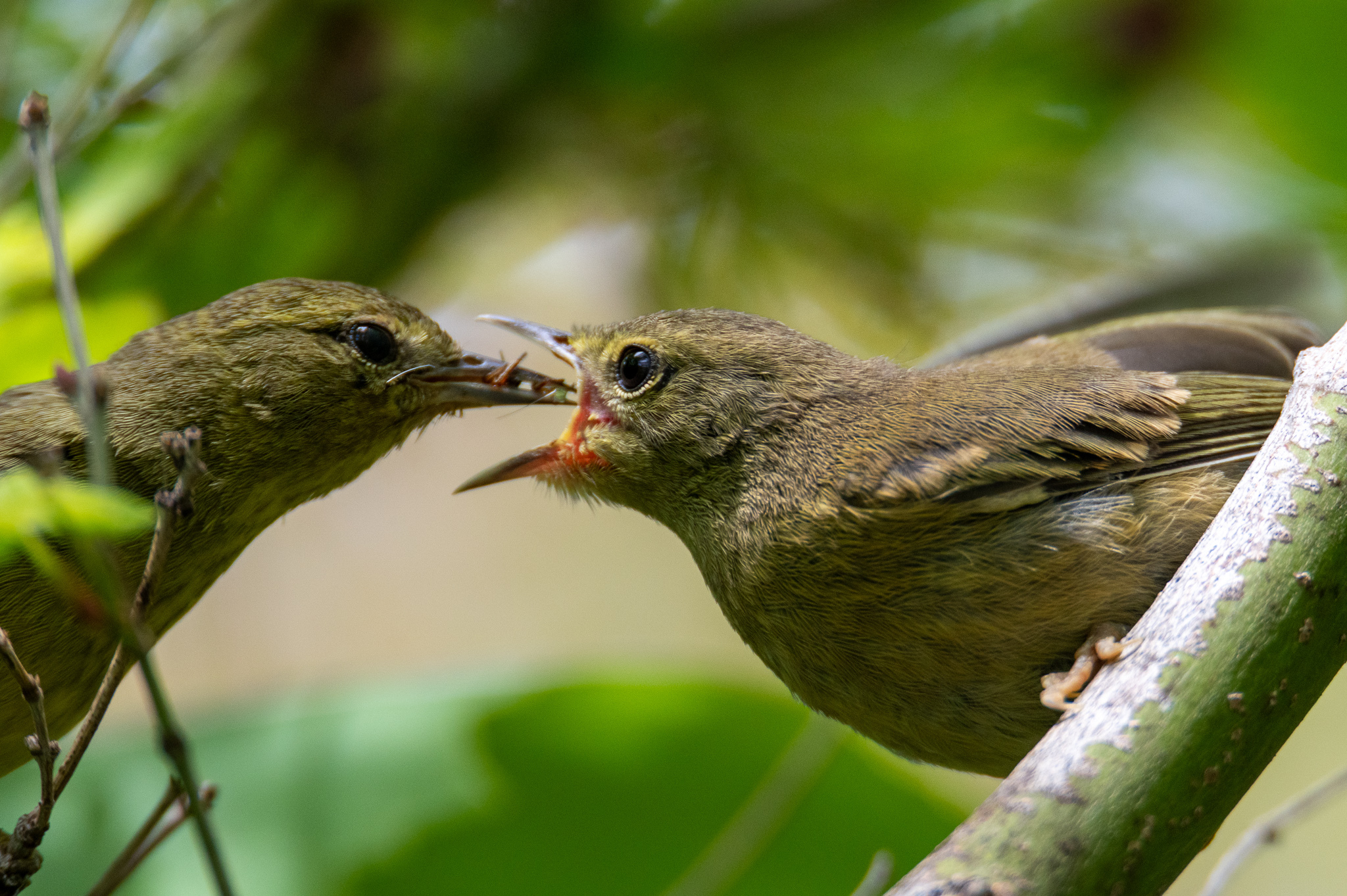
In this last shot, I saw the younger bird sitting fairly still and trilling, mostly hidden by branches. It was largely ignoring me. The branches blocked me getting a good photo, but then suddenly it turned around and came out into the open. I started snapping away, and missed the focus by a bit, but did manage to get a view of the parent coming with a big beak-full of crunchy insects.

More!

There’s a lot of drama in the garden. And it turns out even “boring” little brown birds have a lot more going on than I thought — all I had to do was take a look.

Mon, 13 Apr 2026

Fight the Power(lines)!

— SjG @ 10:45 am

It’s pretty widely understood that photography doesn’t do a very good job of representing objective reality. Choices of cropping, exposure, color balance, saturation, etc, all can be used to project a specific narrative. That being said, I (for the most part) try to do minimal processing beyond those adjustments on most pictures I share.

However, I do digitally alter some photographs for aesthetic purposes. I try to be up front about it when I do (for example, see this picture).

This picture, taken at Descanso Gardens on April 11, 2026, and without any post-processing at all tells a bunch of lies.

Rose Garden

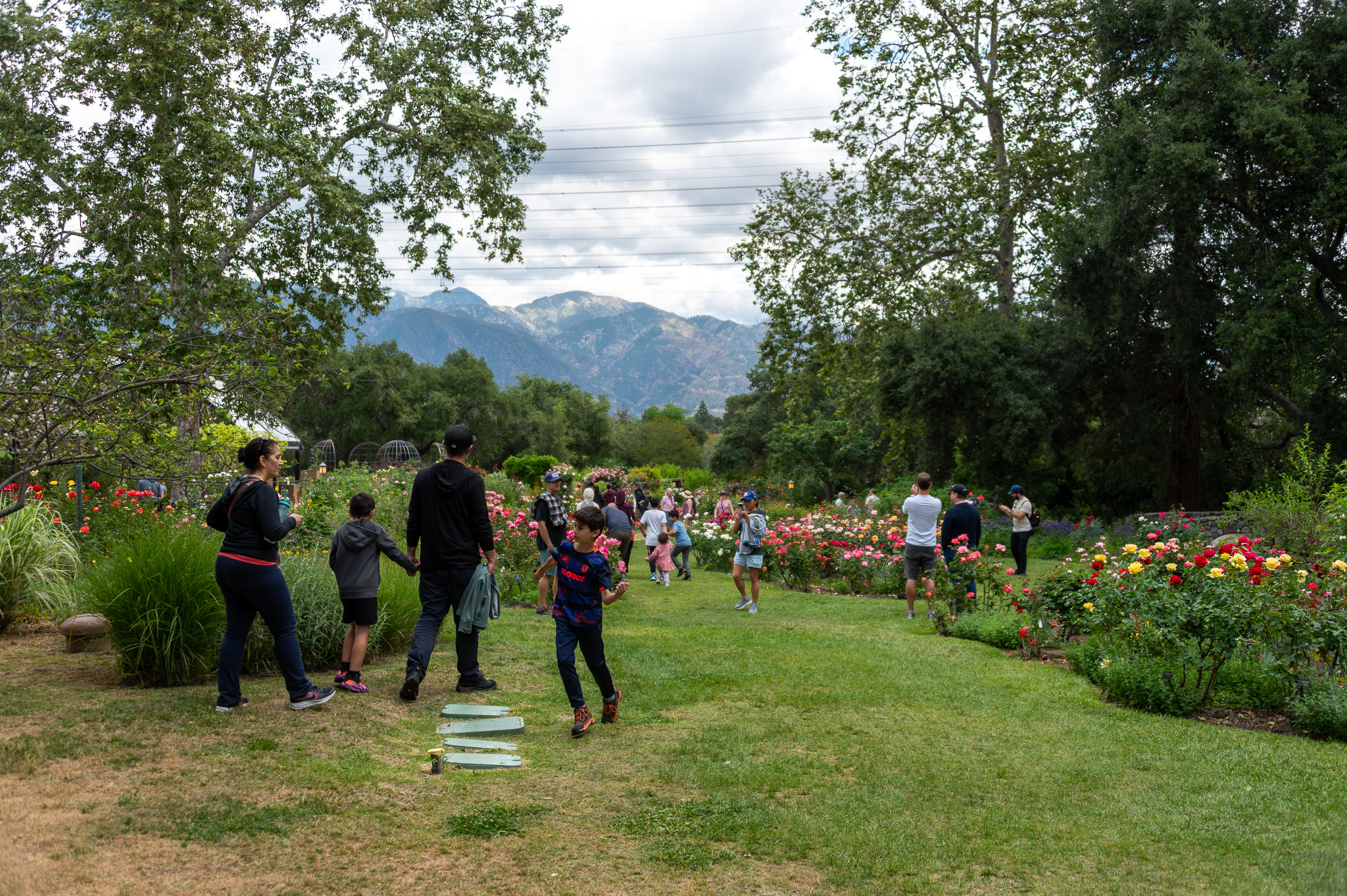
What lies does it tell? It hides the crowds, for one thing. The field is flattened, making the roses appear to be almost a hedge. Here’s a more honest view of the scene:

Crowded day at Decsanso’s Rose Garden

So, by standing over where the guy in the pale blue shirt is taking a picture, and holding my camera low to the ground, I could capture that image above. Then, because I let the camera determine the exposure, the original image underexposed the foreground in order to preserve the cloud details. The color balance was for cloudy skies, and I wanted it to look sunnier. So I punched up the shadow exposure, tweaked the color temperature a tiny bit, and increased the vibrancy by a about 10% percent. Because the overall exposure was increased, I had to adjust highlight settings to pull the cloud detail back in.

Since I was already in fantasy land, I decided to improve it even further by getting rid of those unsightly power lines. Here’s the final result:

Rose Garden
Filed in:Art, General, Photography

Mon, 16 Mar 2026

Mon, 26 Jan 2026